It’s Not Rocket Science
Bulent Altan - The Right Type of Challenging
Early days — "Let’s face it, I think none of us knew anything about rockets."
Flying with Elon — “do I have a job by the time this plane lands?”
The future — “we are going to realize how valuable earth is…and take the dirty stuff away from Earth.”
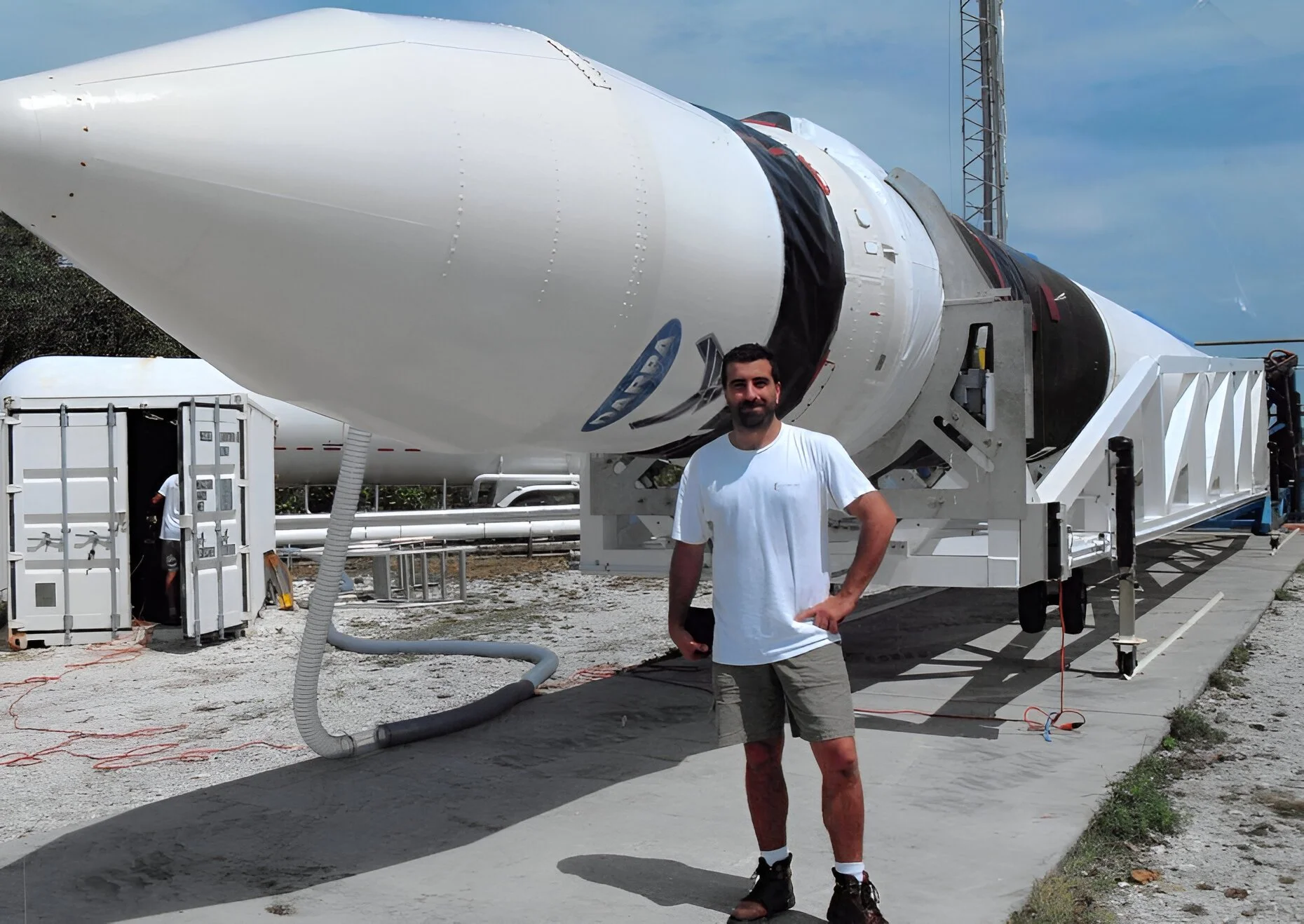
Jeff Ward: Today on It's Not Rocket Science, I'm talking with Bulent Altan. Bulent was one of the first people I met at SpaceX, and he had a long career there starting in avionics and moving on to systems engineering and also product assurance. At the moment, he's running Alpine Space Ventures, a venture fund that invests in European space companies.
Jeff Ward: Do you remember how we met?
Bulent Altan: Well, it was SpaceX. I know that. And it was back in the day, I'd say. Now I have to rewind probably around 2006, 2007.
Jeff Ward: Yeah, 2007.
Bulent Altan: When you came in, but I do not remember the first meeting, to be honest. You were coming in to help us become a real company and maybe bring up the discipline, bring up the execution. And you were coming in to be the VP of avionics guidance navigation control, that's when we got introduced because I was an engineer in that department.
Jeff Ward: For sure. I remember you being one of the more established engineers in that group at the time. I don't remember exactly what you were doing, whether you were stage engineer for one of the stages or whether you were vehicle engineer for one of the vehicles. But
Bulent Altan: Yeah. We hadn't split the stages yet back then that we had different responsibilities. So it was really one side of avionics. Well, all of avionics was very concentrated on hardware build out and building the hardware and software and whatnot, and we needed someone to go out to kind of be on the road and kind of hug the rocket when it needed a hug.
Jeff Ward: So
Bulent Altan: I was traveling around to Texas, to Vandenberg, to Kwajalein, to Cape, to be kind of avionics liaison to the different places. I still was doing some amount of hardware and design, but my main job was to put the vehicle through its paces, get the first turn on of the vehicle, try out the systems, and interface with propulsion launch hub structures to get the vehicle up and running. Kind of a vehicle engineer for the avionics department. That was my role then.
Jeff Ward: Yeah. That's certainly what I remember is that when I was a bit disoriented coming from satellites to rockets, and you knew all this stuff, so I could turn to you to get the answers and get reoriented.
Bulent Altan: Which is very interesting that I gave that impression, because let's face it, I think none of us knew anything about rockets. I came out of school directly into SpaceX, and now I reflect back into it and put on my today's hat of like, would I even invest into if I had talked to myself, like to my 2006, 2007 self about rockets, I would probably go away from that conversation saying, well, this guy knows nothing about rockets.
Jeff Ward: So you guys at least had a couple years on me because I came in in 2007 and you'd already been at it for a while.
Bulent Altan: Yeah. We had the we had the battle scars over a couple of years already. Sure.
Jeff Ward: Exactly. How did you end up at SpaceX? Like you say, you came directly out of school. Was it literally that?
Bulent Altan: It was interesting. Yeah. I came to US in 2001 with the idea that I would go to school there and study aerospace engineering because my actual education beforehand was in Munich where I got a master's in computer science, but I really wanted an applied way of using that degree. My actual heart was always in aerospace, specifically in space. So I wanted to look into that.
So I came to The US with the idea of doing another master's in aerospace. So I ended up in Stanford. And back then in Stanford, there was this one professor, professor Twiggs, who was very much credited with the idea of CubeSats and executing that. So I started working for him as a teaching assistant, worked as a research assistant on some of the satellite programs that Stanford was working. And while doing that, I ended up in a great friendship with a few people to call them up.
They were Steve Davis and Paul Forquera, and we were building CubeSats back then. And it was really back then that group that learned about the existence of SpaceX, and first Steve Davis, then Paul Forquera from my friend's group of building CubeSats as they finished their degrees, went on to go to SpaceX and told me all the great things about it too, I was following it. So when my degree ended, which was a little bit later because I had the research assistantship, I was capped on the amount of credits I could do every quarter. Yves said, Why don't you come down and check it out in person? So I came down to SpaceX and met the team back then.
Was Hans and Phil and Chris Lone, of course, and Brian Beldi, all those legends of early avionics. Was already in department, I had a conversation with them and then already was sold. In my mind, I was already sold on the idea of SpaceX. The like and I was like, okay. I wanna go here.
But then I ended up in the meeting room with Elon. And Elon had apparently heard from Steve that I had a reluctance to moving to LA, and kind of forced my hand on an idea that I already had in my mind said yes to, and thought that he has to get me into SpaceX somehow, and said, well, Bulent, we have a company here and I hear from everyone, you should be someone we should hire, but you're reluctant because your wife works for Google and up in San Francisco. So I called my friend Larry, that was Larry Page, and and they are gonna look into making her work from LA. So what you gonna do now? And I said, yeah.
It seems like my decision is made. So I decided to do that. And I decided to say yes. Well, I had already had decided, so I told him, Yeah. I'll do it.
So I told that to my wife, and my wife said, Interesting. And went to next day to work, and her manager also talked to her and was like, interesting thing happened yesterday. Apparently, you're working out of LA. So it all worked out at the end.
Jeff Ward: So the Silicon Valley network transferred you.
Bulent Altan: Yeah. Absolutely did. But, yeah, I was sold on the idea way before my hand was forced, and I I haven't regretted that a single second since.
Jeff Ward: Going back a half a step, so you were educated in Germany and you are Turkish by birth or what what's the the trajectory of Bulent from Turkey to Germany to America?
Bulent Altan: Absolutely. Yeah. I'm born 1977 in Istanbul, and Istanbul is my home. I stayed there until I was 18. I had always a little bit of a touch point with Germany because my dad was from the German school in Istanbul, and after his graduation and his university, he did his university degrees in Istanbul, but then he decided to do his postdoc in Germany, in Stuttgart, so him and I spent a bit of time in Germany while he was doing his postdoc, I spent a few years on my kind of really early childhood there.
But besides that, I did my middle and high school in another German language school in Istanbul, that was the Austrian school in Istanbul, and when I graduated when I was 18, I really wanted to leave the cradle of home and kind of go be in another city, another country, so I decided that Germany was the place and I ended up in Munich, in the Technical University of Munich, got a degree from there in computer science, and back then German degrees were combined bachelor master degrees, so at the end of that I felt like I had still left a little bit of education on the table because I was so excited about aerospace, and I decided to come to The US, and all of that happened because of my parents, because they had this idea that a Turkish person had no future in aerospace, and what was I gonna do when I studied? So they told me, Go study something where you can earn money, and that's the reason why I studied computer science. First, I had a knack for computers and programming and whatnot, but for me, it was a little bit too dry. So all of that path ended up with me and Stanford studying aerospace and SpaceX.
Jeff Ward: Did you get an impression that sort of each country had its own engineering personality? I know you do a lot of work with European engineering companies and aerospace companies now, and it's one of the things that I was surprised to learn as an American when I worked in Europe that each country seems to have a reputation for having its own way of thinking and its own way of executing projects. Did you notice that as you made your transition, or do you see it now when you're working with these companies?
Bulent Altan: I do. I would say there is distinct cultural effects on the way you work. Different countries have different cultural, I would say, values that reflect into the way you do engineering. What is engineering? At the end of the day, math is math and physics is physics.
It doesn't change from country to country. It's the way you make decisions and it's the way you manage, it's the way you set expectations on yourself that changes. And engineering is exactly that, especially when you're in a startup where responsibility stacks on you where you wear so many hats in a place like SpaceX or all these other companies that I'm involved with today. And there, the cultural effects are extremely visible. Some countries have a bigger failure culture, some countries are more prone to entrepreneurship, some countries do not like to dig yourself out of a hole, rather standing means something.
Just really simple. Look at the Japanese culture, the German culture, not a place where you carry debt. It's a place where you save and when you have the money, you buy something. You never work your way out of a hole. But if you think about venture capital is, to a certain extent, selling away something you haven't, don't have, and you go to live up to that expectation later.
And it's that difference really the way you deal with what's expected of you, that entrepreneurial thinking, it changes from culture to culture. And I see that, but I also see it eroding over time. As we have more cross border workforce, as we have more penetration of the venture capital model into different work environments, I see it's normalizing across the countries as well, especially on the successful side, you realize that there is a playbook that works well. So I go and search for that.
Jeff Ward: So the free exchange of ideas and watching companies and institutions succeed does kind of lead to a flattening of some of the cultural differences between groups.
Bulent Altan: Absolutely. Absolutely. And the fail fast culture and embracing healthy failure, not every failure, but healthy failure, a quick failure and recovering from it and really iterative cycle rather than working on the theory forever for something that is empirical in nature. These things are slowly establishing themselves across the successful companies in the at least in the industries I'm involved in, which is mostly the space industry, of course. Yeah.
Jeff Ward: Right. And I would imagine that when you got to SpaceX, you learned a lot of that there. You'd already been with professor Twiggs and built some satellites and learned it there, but I felt by the time that I got to SpaceX, you guys were deep into learning how to do rockets by doing it and having some failures. What roles overall, what roles did you go through at SpaceX? You started as just avionics engineer, but I don't remember that that's how you ended up.
Bulent Altan: Yeah. So I came in as an avionics engineer. And when I started at SpaceX, There were missing elements of the rocket. We were working on Falcon one. We were still away from the first launch.
We didn't have a rocket fully together yet. When I got in, things that I worked on, it was power distribution and harnessing and some of the ethernet structure, and then really just the systems engineering part of it. Systems engineering is very much tally keeping. What do I have to control? What do I have to sense?
And what elements do I have and how do I glue them together? So all of that ended up on my shoulders. And then I took it over to integration, like putting of coming up with the concept of how we're going to put the rocket together and then test it for the first time without every single time blowing out every single circuit we have on the vehicle. And then testing it like element by element, doing engine testing with avionics, have stage testings, hot fires, static fires, all the way to writing the launch ops procedures and whatnot. So it was a very hands on way of working with avionics as an avionics engineer, doing really just the day to day avionics' work with the rest of the vehicle.
I did that for quite some time, and I think interfacing very much with the other departments became a valuable asset. I knew what the rest of the rocket needed from avionics. So I became also very often the spokesperson of the other departments towards avionics and avionics' spokesperson to the rest of the vehicle. So I went from there to being the manager of systems integration and production. Really I took on the back end of the avionics concept, making sure that we were doing the production right.
We were running the technical, the technician team right, and then we were doing the ops right, and we were doing all the way to launch. During launch process, I used to be the console operator, except for the first launch, was always the console operator at my time at SpaceX, the legendary AVI on the call, on the radio. I did all of that as a manager for a while, then started a sub department within avionics and became the director of systems integration, which kind of made it was a singular role even as a manager early on except for the technicians, but then I took on that role a little bit more in a more structured way, brought in mechanical engineering capabilities to integrate ourselves into the rocket more, vertically integrated within our department, built up a harnessing team, built up a whole production team, then built up a staging integration team, introduced the idea of stage responsible engineers, engineers that follow different stages and make sure that everyone is capable of operating the rocket with someone who understands the interface, electronics interface that runs that rocket. And that was the roles that I went into before I ended up leading that department at some point in time.
Upon your departure, actually, I became the senior avionics, senior vice president of avionics guidance navigation control. And I ran that for a while before I ended up VP of avionics guidance navigation and control and was in the senior executive with that. That went for a while up until a point where I needed a break from SpaceX. That was in 2014, where I took about a year and a half off and tried a couple of things, start up accelerator in a couple of months at Airbus. And then I decided to go back to SpaceX and took on the role of VP of Starlink mission assurance, to a certain extent I was doing the backend check of the Starlink constellation, what we were doing there technically, but also a little bit on the business side, making sure that we are building the right constellation, both in the technical and the business sense.
A little bit, the idea was being Elon's eyes and ears up in Seattle, which does a distance offense doing the satellite work, and I did that for about a year and a half. My SpaceX time came to an end at the end of twenty seventeen where I decided investing and applying myself across the startup world in a different way, but still technically engaged was the future for me.
Jeff Ward: Before we dig into that and hear a little bit more about what you're doing now and how you got there, when you were at SpaceX, obviously, you were a person who interacted with Elon a lot from your first day, and that was the the benefit of being one of the early numbers in. I I got two questions, and maybe they're interrelated. One is, like, do you have a particularly memorable interaction with Elon? And the second is, do you have an anecdote that in kind of encapsulates your experience at at SpaceX? You know, you and I had some pretty interesting times at at SpaceX, and the one that I always remember is when you were flying, I think it was Falcon one flight three out to Kwajalein on the transport plane, and I got a call from you at three in the morning to say that when you guys had landed in Hawaii, the stage had not repressurized at the same rate as the atmosphere, and that stage had crumpled.
And I always will remember that night, and I'm sure you have, like, numerous incidents like that. I'd be curious what one pops into mind and whether it involves Elon or just involves your special ability, I think, really to work in a crisis and get things done.
Bulent Altan: Well, SpaceX has so many different memorable moments and so many highs and so many challenges. I wouldn't even call them lows because they made the highs even better, but it was a challenging environment for sure, and it should be, right? Because what we were trying to do was so difficult. But really, the Elon thing that stayed with me and it keeps on staying with me is the repetitive ask of him shaking his iPhone at me. Every single time we would build any hardware, and you could be as proud as you may want to be about the hardware, we had, for example, built this engine computer.
The first iterations of the engine computer were these giant boxes, weighed like, I don't know, 10 kilograms or whatnot, it was a whole mess of hardware, and he wanted something nice and small and sexy. So in our department, we just built this engine controller the size of an iPad, thin like an iPad with a connector just sticking out the top, we showed it to him, and again, he shook his phone at me and said, Come on, you see this thing? This is 10 times the power of that computer you got there and it has a battery and display. That one doesn't even have that. You're still missing the mark.
And that ruthless look for constant comparison and going into first principles and showing you what you're still leaving on the table, even if you thought you just did an amazing thing, it stayed with me for sure. And is it 100% valid? No, let's face it, the two things do very different things, but I think it was this method of constantly asking, did you do the best possible or is there still room to grow? And really trying to pull the best out of it, It worked out well for us. If you could deal with that type of personality, if you kind of didn't always need a pat on the back and said, great job, this is the best thing I've ever seen, but rather took that as a challenge.
You were a little bit of a, I don't know, call it a daddy pleaser. It's like, Hey, I want to show another version, which is even smaller. Let's see what I get out of it. If you're a person like that, it worked for you. Yeah, I think that's the thing that stayed with me.
But my memory is from a different flight to Kwaj if I had to pull out a singular moment, and that was Falcon one Flight one. It was on one of the static fire campaigns. We had just erected the rocket on the launch pad, and a box of mine just melted its capacitors because we decided to raise the external voltage being fed into the vehicle without thinking about it twice, and it just blew through a few of capacitors that developed us short, and it was my box that was keeping us from launching. I had to fly back to US and within forty eight hours, as you said, where I tend to operate, fly back to US, fix the thing and fly it back. And the flight back did end up on Elon's plane with Elon on the plane.
So, and there was this very notoriously unwanted chair on that plane, which is the one sitting across from Elon. Every now and then when you're boarding the plane, you will try to slowly sneak past that seat. Elon will tell you, Why don't you come sit down here? And I ended up on that seat on that flight, and he asked me about this box and why I missed it and what it was there. And it was interesting.
It definitely was a nail biting moment. It's like, hey, do I have a job by the time this plane lands? But the conversation was informative for him, and it made me realize how much actually he wants to learn and he wants to understand and how much also he's looking into whether you sit there and bullshit him just to get yourself out of the situation, or you just gotta talk the straight facts and give it as is, and when I did that, I think I was in clear waters.
Jeff Ward: I like that. I think that there's a degree of misinformation about his level of depth of understanding of the things that he does, and certainly my experience matches yours, is that he wanted to understand, and he did understand, and he could keep you on your toes with real facts. No matter how deep you were in your system, he could follow along and ask the right questions. I
Bulent Altan: Absolutely. And I really appreciated that. It was also impressive to see let's face it. Our avionics domain ends up being close to very many of the other Silicon Valley topics. We deal with software, deal with computing, we deal with networking, we deal with control systems, and those are things that he is also interfacing with on a daily basis.
So when you went into a room and thought about concepts and whatnot, you would get from him in-depth knowledge that comes from the other engagements he has. The amount of challenge he could bring into a situation was very often eye opening and made us be on our toes and made us a better department for sure. Was it comfortable? No. But it was the right type of challenging.
Jeff Ward: Yeah. Agree with that. I think that's probably the best side of Elon, and it's what got us through so much progress so fast and kept that progress going all the way to today, in my opinion.
Bulent Altan: Yes.
Jeff Ward: How did you end up moving on when after you'd gone back to Starlink and done your second tour as it were, how did you decide to to go on, and and what did come next? What were the transitions that you went through in the last few years?
Bulent Altan: Yeah. It wasn't an easy decision to move on, and it wasn't an easy second stint at SpaceX to start with because my first stint at SpaceX was very much running a department whose job was to design, whose job was to build things. And if you know me, you know I'm a very hands on person. I like designing, I like being there and whatnot. And suddenly I was more a tourist to a certain extent from LA to the Seattle environment.
I tried to contribute very much to the Starling, and I think I did, and I understood technical work, but I wasn't a part of the team. I second was head to a department that needed to do rather mission assurance, and that wasn't my job. I realized I wasn't being as effective as I normally was in my first. And I think I look at Falcon nine, I look at Dragon, I look at all the things that we do, the launch ops and whatnot. I go to the factory the other day a couple of weeks ago, went against with SpaceX, and I see my signature in places still.
And that's because I made decisions early on and it kind of went into the products that we do. In Starlink, that wasn't the job. Other people were making decisions. Mine was to second guess it or put the challenge and whatnot, but my job wasn't to give like, idea, be part of the ideation process. I wasn't being as effective.
I wasn't getting as much from that second stint as I wanted to. So we went all the way to the end of the prototyping process, the Tintin satellites. Then I had a very challenging talk with Elon where I said, You know what? I think I'm going to leave and I'm going to try my hand either setting up a venture capital or some kind of an angel investing setup. That's what I want to do.
Was a challenging talk. Can tell you Elon wasn't very pleased on that idea, and he still doesn't think very highly of the idea of venture capital and people like me going in there and doing that. But I think I had decided to move on, and I think I made myself a good corner where I still get to be an engineer and a VC at the same time.
Jeff Ward: Talk a little bit about that, how you guys started the fund and what you've been focusing on. I've followed from a distance, and it seems like you decided that the European companies were something that you could try to take your perspective from The US and not apply it directly, but use it to understand the landscape of European aerospace?
Bulent Altan: Yeah. It was a lengthy start to becoming a successful, or let's call it like an established venture capital. Successful you'll be when I return a multiple of the capital back to my investors. But yeah, we're an established venture capital now. But it took a long process.
So I left in 2017 with the idea of trying a venture capital company, and my first idea was a VC called Global Space Ventures. The idea was to establish something US European, in US invest into more established startups and in Europe invest into the start of the space industry over there. Through multiple reasons, there was also a little bit of partner mismatch. We were a partner set of four and we had different ideas on how to run it, how to establish ourselves. Over a couple of years, we tried that and it didn't work out.
And that's a good thing. I learned a lot about venture capital then, probably worked through some money I probably shouldn't have learned, but I learned a lot in that process. Took those ideas to get to know a lot of people. Also found a company in Europe that I really liked, that the founders were the winners of the SpaceX Hyperloop competition, and they were building a launch vehicle company called ISAR Aerospace. So I made a personal investment there.
I said, I've to start investing somehow. I made a personal investment there and started supporting them. In that process, got to meet my current partner in the venture capital company that I'm running today with him, and we invested into that company together. It was a personal investment, angel investing. And over time, I became the chairman of the board of that company and got to be a super hands on investor.
And I really liked what I was doing there. I was both scratching my engineering itch, but also being an investor as I wanted to be. And that led me over a couple of years interfacing with that company. I needed something to do in the meantime, so I took on the role of a CEO of an established company in Europe. They were called Mineric, they were doing optical comms, and that was also for me a way to also be still engaged in the space industry.
I took that company, that was a small German company kind of struggling to build optical comms, and I rebaselined them, changed their business case, grew them to be a lot bigger from a few people to about 300 people, and won them quite a bit of US business, listed them on NASDAQ, and then with the large order backlog and some amount of capital in the factory, left them to their own devices and moved on to becoming their chairman as well and then out of the operative. And then went back to the capital world and did my second run at venture capital, this time with my co investor in Isar Aerospace. That's Johan Ferdkelien. This time around, it worked. We raised €170,000,000 fund in Germany and we started investing.
We took that same approach that we did with Isar Aerospace, which was very hands on investing, not just here's money, they'll see each other quarterly over a PowerPoint. Rather, I talk to my every founder daily. It's just the way it is. I just like doing that. If you open up my single chat, it's all my founders.
So we took that hands on approach, started fund one, deployed it all, invested into seven companies right now raising a fund two, and that's what I do now. This was my path to venture capital. And I gotta be honest, I'm quite happy with what I ended up with. I get to do engineering every day. I get to do still write proposals every day.
I get to network every day. I don't go to investor conferences, rather I go to space conferences still. I get to be in the industry where I'm at, and I get to support it.
Jeff Ward: Well, people can't see you on this podcast, but I can see you in your office surrounded by artifacts from some of these companies and the things that you do. Also, I see the smile on your face, and that's a good sign that Alpine Space Ventures is really making you happy. It it leads me to a question that I haven't discussed with anybody before, but I'm seeing it come up from some of the former SpaceXers that I know is, like, what advice would you give people who wanna get into angel investing? Because I think it's something that from a technical background and a little bit of success, it's a pivot that people want to make. And what's the step one that you might advise those people?
Bulent Altan: Everyone will have a different answer, and I will put on my VC hat there and be a little bit more methodical. And what really for me is one of the one of the things to look out for, and I think where people make quite a bit of mistake coming out of SpaceX and going into angel investing, and that's early revenue creation. SpaceX was a company that took quite a bit of time from first inception to taking venture capital and also to really generating product based revenue. It took us six years to have our first rocket off the pad and even longer to really have a cadence that really brought in revenue. We were driven by technical challenge and a couple of other things in SpaceX that I look at for a little bit differently right now, differently at companies right now.
I think everyone coming out of SpaceX has a really good knack on understanding the technology, where things fit into the space industry, understanding that a team is high performing or not. That is probably, I don't have to tell anything there to people coming out of those basics. What I think they do very often is a mistake, is they get excited about the technical challenge and what people are missing, and they see the final image of what the company can be in fifteen years or so. But what I look for when I invest into a company is making real revenue within year two or three, at latest. And real revenue, real customer interaction, starting to solve problems and really doing it in a disciplined way shapes a company.
Customers shape a company. And even if the customer is trying to buy a service in an old fashioned way, pivoting them to something where your business case makes sense, that brings discipline, execution, excellence into the company. Suddenly schedules mean something because your cash flow is tied to customer interaction, not just raising blindly over and over again. That's something you've got to look for. And that's something where I see quite a few SpaceXers get it not right in the first time they invest into companies projecting cash in so far into the future because the technical challenge just sounds exciting.
And the final image sounds exciting, you've to have wins along the way.
Jeff Ward: That's interesting advice. I would think, you know, this has been a a great conversation and a good insight. It's also just good to connect again after not really having a detailed conversation in so long. Like, what was your takeaway from Minaric? We know right now they just got absorbed into Rocket Lab.
Along the way. My shares went to zero. What was your quick takeaway from that?
Bulent Altan: That was a painful experience. Like, we were that success didn't mean success there. And we were we were extremely successful, but it didn't mean success there. So the big, we messed up in execution when we didn't have the runway to deal with every single potential outcome. Then we got delayed.
We ran out of cash. So bottom line is you gotta get keep a much better look at your cash resource and cash flow, and make sure that one single or a few stacked bad bad events do not take you completely into the negative.
Jeff Ward: That's yeah. That and that connects back to what you just said about the angel investing too. And what was your similar like, you had a long career arc at SpaceX with a lot of things in it, but did you have a SpaceX takeaway, a SpaceX one liner? It's like, this is my SpaceX lesson.
Bulent Altan: Not quite one liner, but I say it this way. And I say it for the managers out there that still manage quite a bit of people and the startups and whatnot. Challenge your people to sign up for things they think they can't achieve. Then help them achieve it, and they will get addicted to that feeling.
Jeff Ward: I love it. That's excellent. And what would you recommend to somebody who's just getting out of school and wants to get into this ecosystem? The ecosystem has now changed so much that I wouldn't know what to tell people.
Bulent Altan: Tough for me as well. To be honest, there aren't that many companies out there that have the same failure culture in SpaceX. Find the one where you can get a breadth of experience and then try to have an iterative learning process. Because if you just absorb the company culture as is from already established corporate structures and probably even SpaceX belongs in there right now, you're not going to really have the lesson that you need for the rest of your career.
Jeff Ward: Cool. And my last one, before I let you go back to running your company, is a slight pivot and you and I discussed this a little bit a few weeks ago, but do you think that we can make the world a better place?
Bulent Altan: Absolutely. Let's face it. People ask me, What will be your philanthropy? And I say, It's my venture capital company. I make people make businesses that create jobs that create impact on the world.
But if you ask me my romantic future vision, it's that we are going to realize how valuable earth is. And the best way to protect earth is to take the dirty stuff away from earth. And you only do that with spaceflight. And we are by definition, the ones that really help this industry to get get away. Like, I would love the darkest stuff away from Earth because it is a singular planet.
Jeff Ward: That's a really fine point to end on. I like that vision because it's positive, and it also helps people understand that what they're doing does have an impact on the Earth and even on a deep future as well. So I appreciate that.
Bulent Altan: Thank you.
Jeff Ward: I appreciate you taking all the time to to talk to me, Bulent. It's been good to catch up and to, like, explore some of these things.
Bulent Altan: Same same here. It's actually really good to reflect on it. I know quite a bit of the listeners are probably also ex SpaceXers, so but, yeah, hi to all of them, I suppose.
Jeff Ward: My main takeaway from my chat with Pulent was that you have to try things that you don't think you're gonna succeed at. And if you're a manager, you have to ask the same of your employees, but then be there to help them succeed. Thank you to Devan Schwartz for producing this episode, and you can find us at itsnotrocketscience.space.